ARK Alliance

Home of the Archival Resource Key (ARK)

Notice:   This site is undergoing changes for accessibility and usability.

ARK Alliance

Archival Resource Keys (ARKs) serve as persistent identifiers, or stable, trusted references for information objects. Among other things, they aim to be web addresses (URLs) that don’t return 404 Page Not Found errors. The ARK Alliance is an open global community supporting the ARK infrastructure on behalf of research and scholarship.

End users, especially researchers, rely on ARKs for long term access to the global scientific and cultural record. Since 2001 some 15.3 billion ARKs have been created by over 1800 organizations — libraries, data centers, archives, museums, publishers, government agencies, and vendors.

ARKs are open, mainstream, non-paywalled, decentralized persistent identifiers that you can start creating in under 48 hours. They identify anything digital, physical, or abstract.

Some things that have ARKs — an article, violin, genealogy, painting, book, sports photo, and plant specimen — assigned by the Louvre, Smithsonian Institution, Internet Archive, California Digital Library, and FamilySearch.
Some things that have ARKs — an article, violin, genealogy, painting, book, sports photo, and plant specimen — assigned by the Louvre, Smithsonian Institution, Internet Archive, California Digital Library, and FamilySearch.

ARKs are similar to DOIs, URNs, and Handles

All of them:

In contrast, ARKs are cheaper, more flexible, and less centralized

Using ARKs allows you to:

To get started creating ARKs, please fill out this request form for your organization. If you wish to get involved in the ARK Alliance, consider joining one of its working groups.

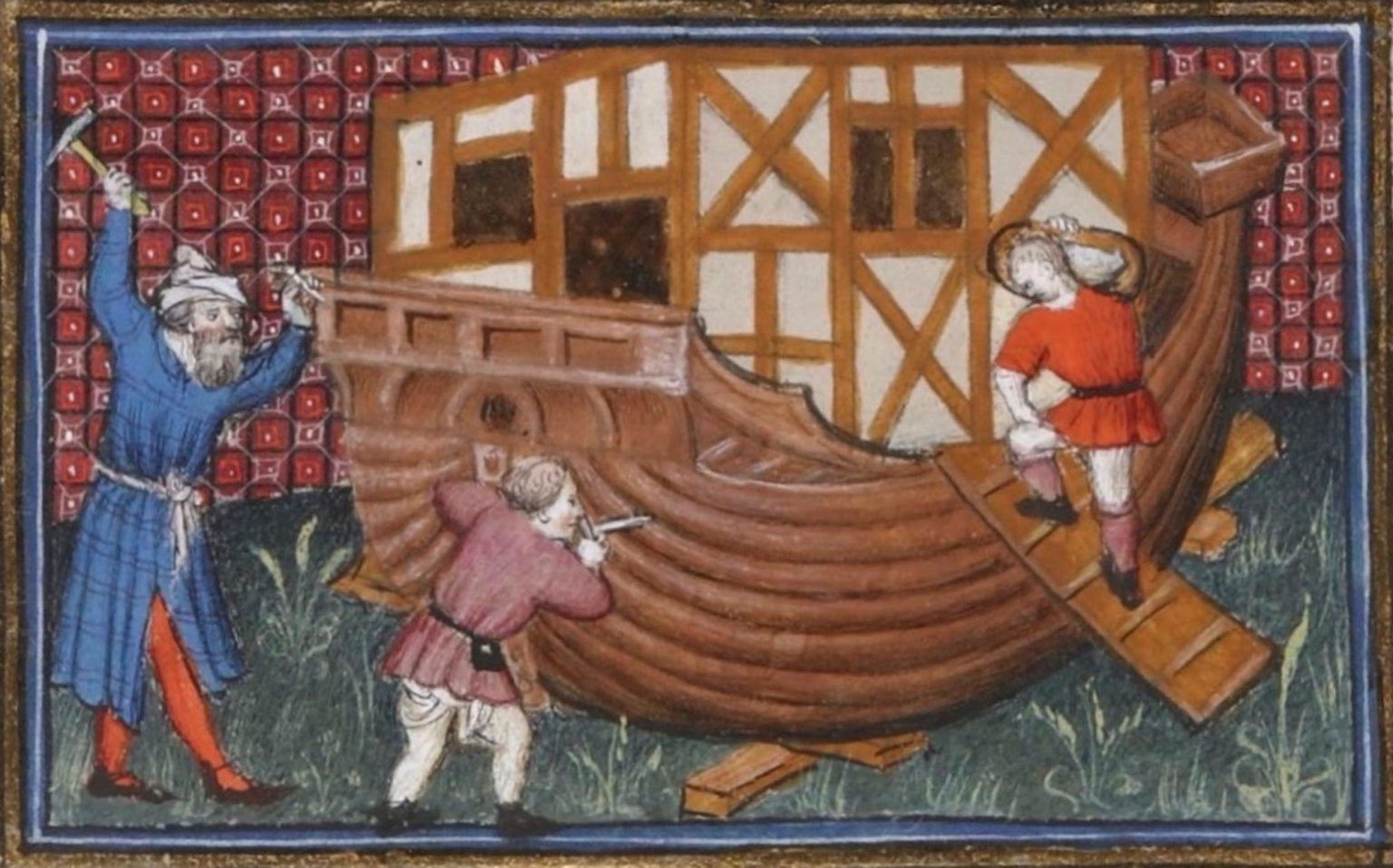
Working on the ARK. From a 1401 manuscript page, illuminated by Johannette Ravenelle, that itself has an ARK identifier:  (source gallica.bnf.fr, National Library of France).

Working on the ARK. From a 1401 manuscript page, illuminated by Johannette Ravenelle, that itself has an ARK identifier: <https://n2t.net/ark:12148/btv1b8449691v/f29> (source gallica.bnf.fr, National Library of France).